“Dear HER-Health” with Heather Florio: Summer Skin Protection
Dear HER-Health,
We're heading to the beach with the kids this summer, and I want to do right by my skin and theirs — but I'm standing in the pharmacy aisle completely overwhelmed. Mineral or chemical? SPF 30 or 50 or 100? And now I'm seeing headlines about a new sunscreen ingredient the FDA just approved, so I don't even know if what I'm holding is already outdated. I love long days in the sun, but I don't want to pay for it later with sun damage — or worse. What are the best choices I can actually make to protect all of us this summer?
You picked a genuinely exciting moment to ask, because the sunscreen world just had its biggest news in a generation — and I'm going to start there, then bring it right back down to what you should toss in your beach bag this week.
First, the headline you saw is real — but it comes with a catch.
This June, the FDA approved a new sunscreen ingredient called bemotrizinol — the first new filter added to the U.S. sunscreen rulebook since the late 1990s. Dermatologists are genuinely thrilled, and for good reason. Bemotrizinol is highly photostable, meaning it doesn't break down when the hot sun hits it — unlike avobenzone, which until now has been the main non-mineral ingredient offering real UVA protection in this country. It defends against both UVA and UVB rays, it's been used safely in Europe and Asia for over two decades, and its larger molecules mean less of it is absorbed into the body. In short, it closes a protection gap American shelves have had for years.
Here's the catch: it isn't for sale yet. Manufacturers can only begin putting bemotrizinol into their products in August, so you won't find it for this summer's trips. Think of it as a wonderful coming attraction — one to ask for by name later this year — not an option for your suitcase right now. So let's talk about what's already available and excellent.
The best choice for the beach today: keep it simple, keep it mineral.
When you're standing in that aisle, you only need to confirm three things on the label:
Broad-Spectrum — protects against both UVA rays (the deep ones that drive aging and skin cancer) and UVB rays (the ones that burn).
SPF 30 or Higher — and for a full beach day, SPF 50 is the sweet spot dermatologists recommend.
Water-Resistant — non-negotiable for swimming and sweating.
For you and especially for the kids, I'd reach for a mineral sunscreen — the active ingredient will say zinc oxide or titanium dioxide. Mineral formulas are the gentlest choice for sensitive skin, they sit on top of the skin rather than being absorbed, and they're naturally photostable. The chalky white cast that gave them a bad reputation has largely been solved in newer formulas. (Chemical sunscreens work well too — the truest rule is that the best sunscreen is the one you'll actually reapply all afternoon.)
Application is where most of us quietly lose our protection.
So at the beach:
Use about a shot glass-full for your body. Most people use half what they need.
Apply it 15 minutes before you go out, then reapply every two hours — and after every swim or towel-off.
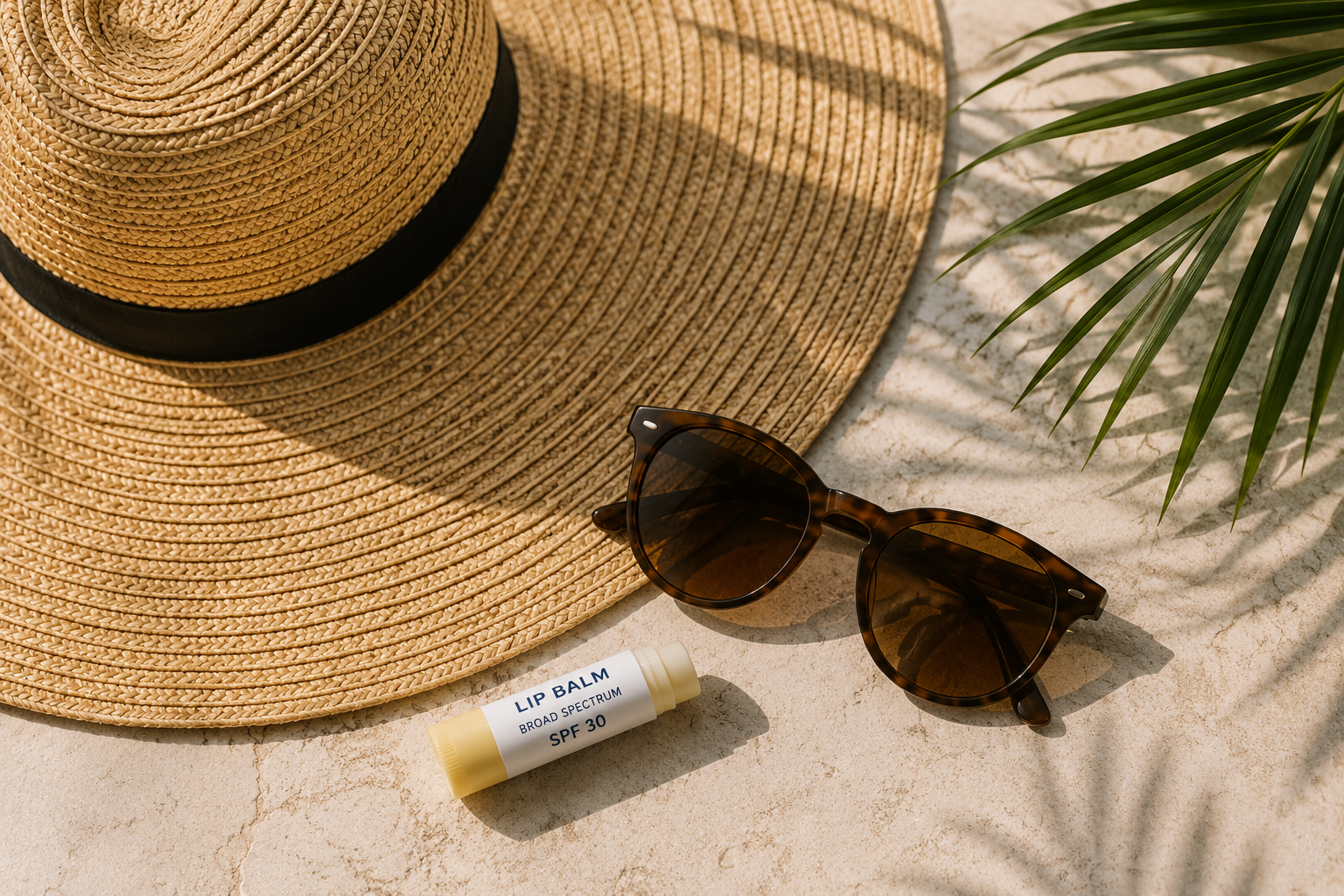
Don't forget the spots we all miss: ears, the part in your hair, the back of the neck, the tops of the feet, and your lips with an SPF balm.
And remember — sunscreen is your last layer, not your only one. The most powerful sun protection on the beach isn't in a bottle at all. Seek shade under an umbrella, especially between 10 a.m. and 4 p.m. when the sun is strongest. Dress the kids (and yourself) in rash guards and UPF clothing, wide-brimmed hats, and sunglasses. A rash guard plus an umbrella does more heavy lifting than any SPF number.
Beyond the beach, a handful of daily habits do the real anti-aging work.
The single most effective wrinkle-prevention tool in existence is the sunscreen we just talked about — worn every day, not just on sand, because UVA rays reach you through clouds and car windows all year long. But a few simple additions multiply the benefit:
Add an antioxidant in the morning. A vitamin C serum layered under your sunscreen helps neutralize the free radicals that break down collagen, and it brightens skin tone over time.
Use a retinoid at night. Retinoids (prescription) and retinol (over the counter) are the gold standard for softening fine lines and stimulating collagen. Ease in slowly — two nights a week to start — and use them only at night, since they make skin more sun-sensitive, which makes that morning sunscreen all the more essential.
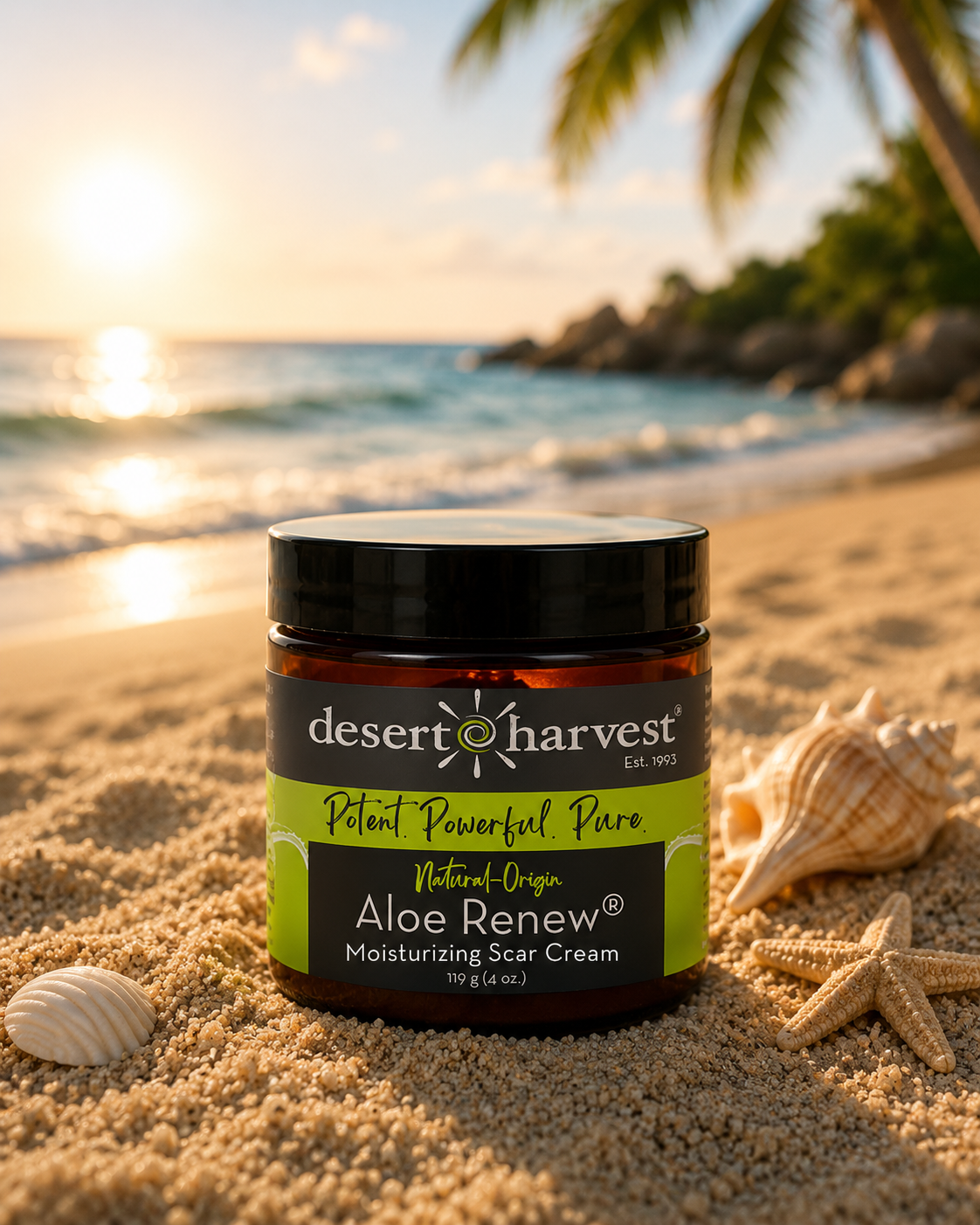
Protect your skin barrier. A gentle cleanser and a moisturizer with ceramides or hyaluronic acid keep skin hydrated and resilient — Desert Harvest Aloe Renew is a good option here for keeping skin nourished and that barrier supported. Stripped, over-exfoliated skin actually ages faster, not slower — more isn't better here.
Feed your skin from the inside. Colorful, antioxidant-rich foods, healthy fats like omega-3s, and plenty of water all support your skin. Going a little easier on sugar and alcohol helps too — excess sugar fuels a process called glycation that stiffens the very collagen we're working to preserve.
The non-negotiables. Don't smoke or vape (few things age skin faster), guard your sleep (your skin does its repair work overnight), wear your sunglasses (they prevent both squint lines and damage to the delicate skin around the eyes), and skip tanning beds entirely.
And if you'd like a plan built for your skin, a board-certified dermatologist can tailor one — and give you a yearly skin check while they're at it.
And if a burn slips through anyway — be gentle, and reach for aloe.
Even the most careful among us get caught sometimes: a missed spot, a too-long afternoon, a reapplication we fully intended to do. If you do burn, treat your skin tenderly while it recovers. Get out of the sun, cool the skin with a cool (not ice-cold) shower or compress, drink extra water — a burn draws fluid up to the surface and leaves the rest of you parched — and skip anything harsh or heavily fragranced that might sting already-irritated skin. Leave any blisters intact, and please call your doctor if a burn is severe, widely blistered, or comes with fever, chills, or nausea; those signs deserve real medical attention.
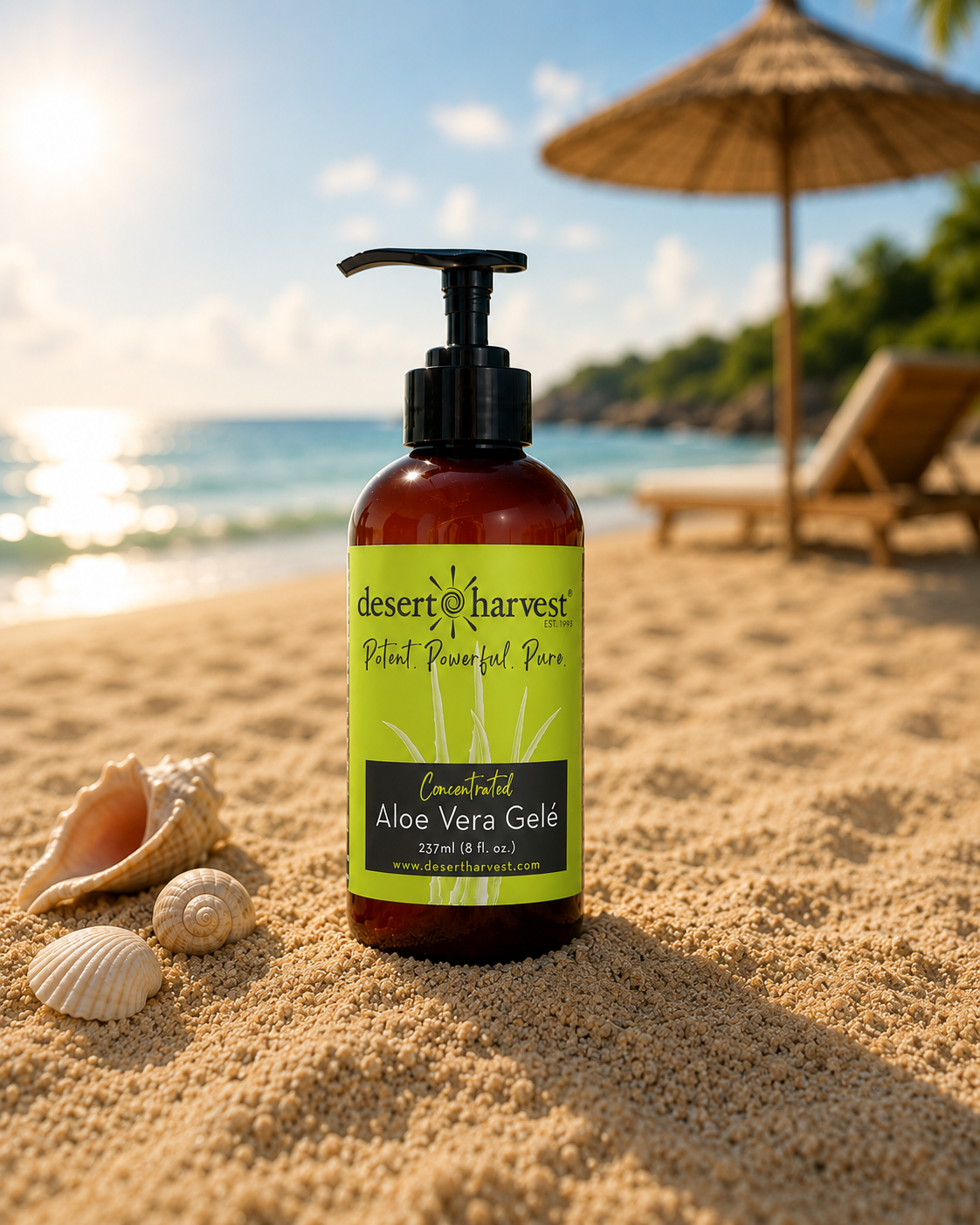
For the cooling, soothing comfort that minor sunburn cries out for, this is the moment I reach for Desert Harvest Aloe Vera Gelé. Here's something most people don't realize, though: a great deal of what's sold as "aloe" on drugstore shelves contains very little measurable aloe vera at all. It's tinted that familiar neon green and padded out with fragrances and fillers that already-irritated, sunburned skin simply doesn't need. A truly quality aloe gel is almost boringly simple — aloe vera and a couple of preservatives, and that's about it. So when you're choosing one, avoid the green, avoid the long chemical-laden ingredient list, and look for that short, honest label.
Why all of this is worth the fuss.
Skin cancer is the most commonly diagnosed cancer in this country, and those deep-penetrating UVA rays are the ones that both age our skin and contribute most to it. That's exactly why photostable UVA protection — from zinc oxide now, and bemotrizinol later this year — matters so much. Protecting your skin isn't about fearing the sun or sitting out the season. It's about protecting the very days you love so you can keep having them, summer after summer, with those kids growing up beside you.
So pack the mineral SPF 50, the hats, and the umbrella — reapply with abandon — and go have your beautiful, well-protected beach day.