By Heather Florio
Dear HER-Health,
I'm 52 and recently entered menopause, and honestly, I feel like my body has become a stranger to me. My weight is shifting, I feel weaker than I used to, and my doctor mentioned I should be thinking about my bones. A friend keeps telling me I need to start lifting weights, but the whole idea intimidates me. I've never set foot in a weight room, and part of me wonders if I've simply left it too late to bother. Is strength training really worth it at my age, and if so, where on earth do I begin?
— Starting from Scratch in Scottsdale
Dear Starting From Scratch,
First, let me say this plainly: you have not left it too late. In fact, you're arriving at the exact moment when strength training has the most to offer you. The feeling that your body has become a stranger is one I hear from women again and again as they move through menopause, and the good news is that lifting weights is one of the most powerful ways to feel at home in yourself again.
Here's what's happening beneath the surface. As our estrogen declines during this transition, we lose muscle mass and bone density more quickly than before. Muscle isn't just about looking toned; it's the tissue that keeps us strong, steady on our feet, and metabolically resilient. When we lose it silently over the years, a process researchers call sarcopenia, everyday tasks get harder, our metabolism slows, and our risk of falls and fractures climbs. Strength training directly answers all three of those concerns at once.
Let me walk you through why it's worth it:
1) Your bones: This is the one your doctor was pointing toward. The years around menopause are when women can lose bone most rapidly, and that's precisely why weight-bearing and resistance exercise matter so much now. When your muscles pull against your bones under load, they signal those bones to hold on to their strength. Think of every lift as a message to your skeleton: “We still need you”.
2) Your metabolism: Muscle is metabolically active tissue. It helps your body use energy and manage blood sugar more efficiently. As muscle declines, that shift you're noticing on the scale becomes harder to counter with diet alone. Rebuilding muscle gives your metabolism something to work with again, and it does so in a way that no amount of cardio quite replicates.
3) Your independence and confidence: This is the part that doesn't show up in a lab report but changes everything. The women I know who strength-train through midlife talk less about numbers and more about feeling capable; carrying their own groceries, keeping up with grandchildren, standing tall. Strength is freedom. It's also, quietly, a mood-lifter and a wonderful antidote to the sense of powerlessness this life season can bring.
Now, where to begin, because intimidation is the real hurdle here, not the weights themselves:
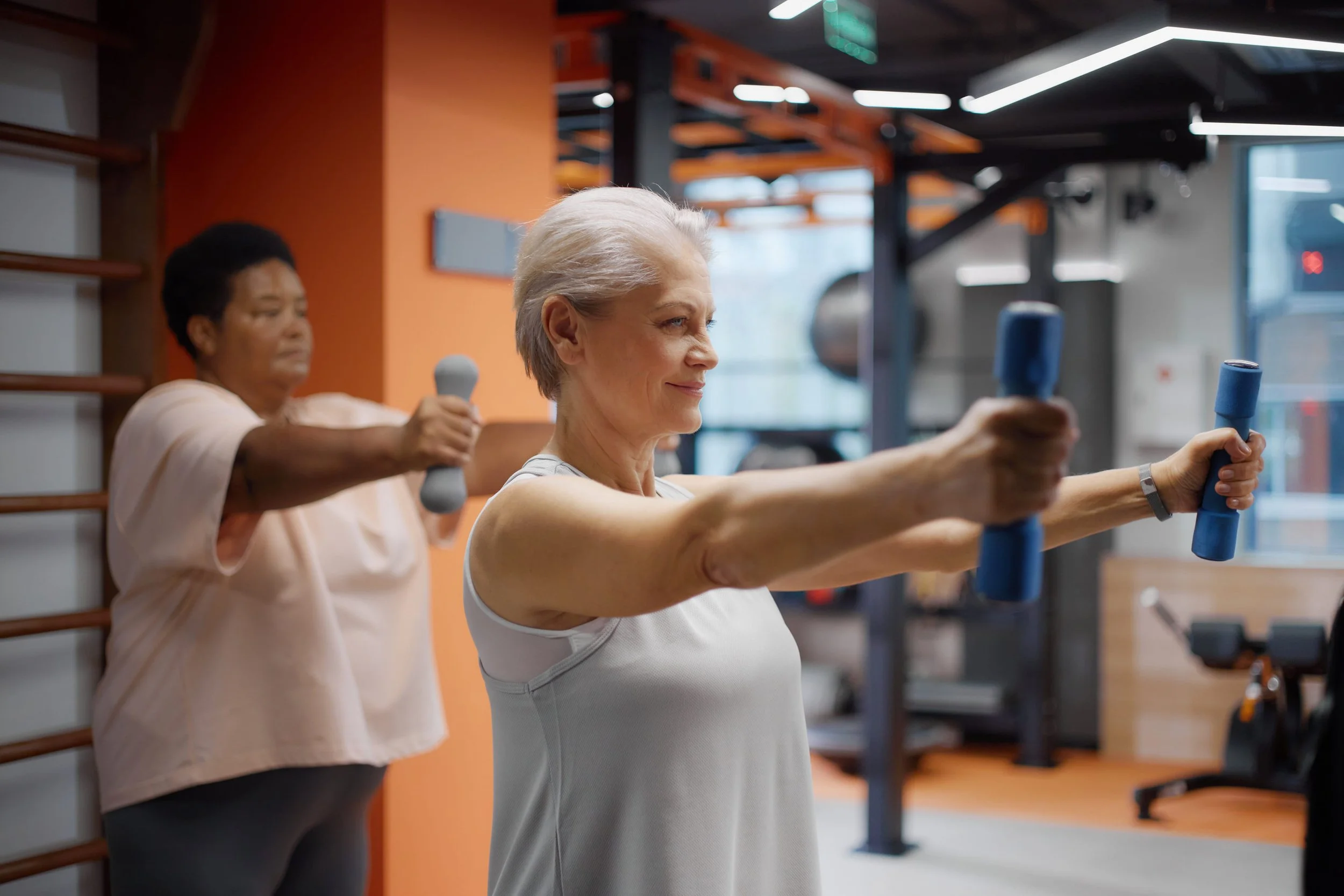
You don't need a weight room: You can start at home with your own body weight, a pair of light dumbbells, or resistance bands. Sit-to-stands from a chair, wall push-ups, and gentle rows are perfectly legitimate places to begin.
Twice a week is enough to start: You do not need to live at the gym. Two short, focused sessions a week, working the major muscle groups, will get you meaningful results.
Form before weight, always: Consider a few sessions with a trainer or a physical therapist who works with women in midlife. Learning to move well first protects you and builds confidence fast. If you have any bone-density concerns already, this guidance is especially worth it. For science-based instruction designed specifically for women in this stage of life, Dr. Stacy Sims' online Menopause 2.0 program is a wonderful place to deepen your understanding.
Progress gently: The magic isn't in lifting heavy on day one — it's in gradually asking a little more of your muscles over time. Small, steady increases are what build lasting strength.
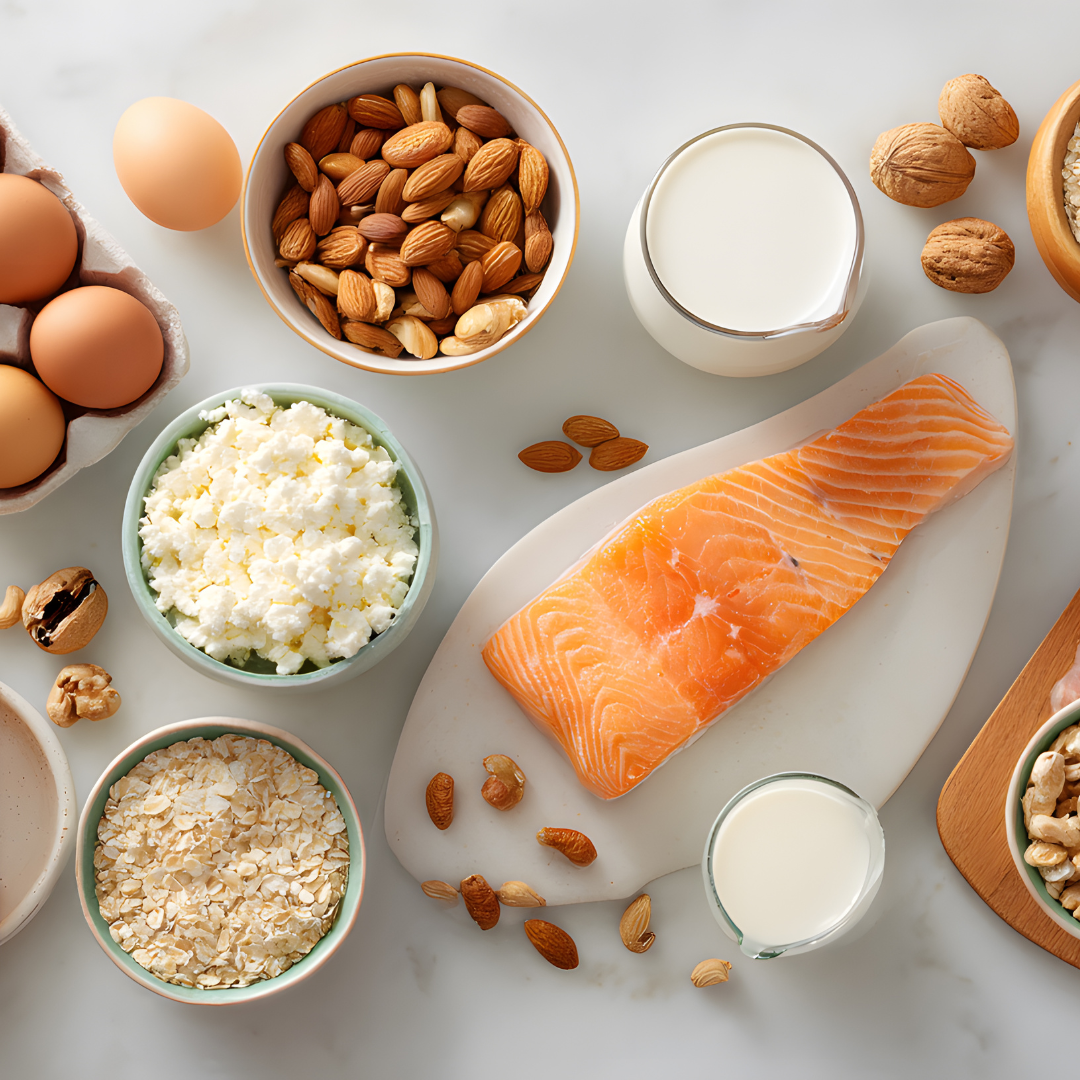
Feed your muscles: Pairing your training with adequate protein gives your body the raw material to actually rebuild. And beyond protein, creatine has emerged as one of the most researched and promising supplements for women in our stage of life. Women naturally carry lower creatine stores than men, and studies in postmenopausal women show that a modest daily dose—typically 3 to 5 grams of creatine monohydrate—can support meaningful gains in strength and lean muscle, especially when paired with resistance training. Researchers are also exploring encouraging connections to bone health, mood, and the mental sharpness that can feel frustratingly elusive during this transition. It's remarkably well-tolerated and safe for most women, though as always, it's worth a conversation with your doctor or a dietitian first. And if you do give it a try, quality and purity matter enormously—the only brand I recommend is Momentous Creatine, which is third-party tested and NSF Certified for Sport.
Mind your iron - It fuels your muscles: Here's a connection many women overlook: iron is essential to muscle health. It's a building block of myoglobin, the protein that carries oxygen to your working muscles, and it supports the muscle metabolism, oxygen delivery, and tissue repair that strength training relies on. Because iron needs and stores shift as we move through midlife, this is worth attention now. One newer option is lactoferrin, a protein found in milk and in our own bodies, available in a highly bioavailable human form (such as Desert Harvest Lactoferrin, using the world’s first human lactoferrin cells – not sourced from bovine), which can help support healthy iron status and, in turn, oxygen delivery to muscles and muscle growth and repair.
And please, before you begin, check in with your physician, especially given your bone conversation, so your plan fits your body and history.
I'll leave you with the truth I wish every woman heard at 52: this is not the beginning of decline. It can be the beginning of the strongest, most capable version of yourself you've ever known. Your body isn't a stranger — it's simply waiting for you to reintroduce yourself. Pick up the weights. You'll be amazed at who's still in there.
