More Than a Persona: What Drag Teaches Us About Identity
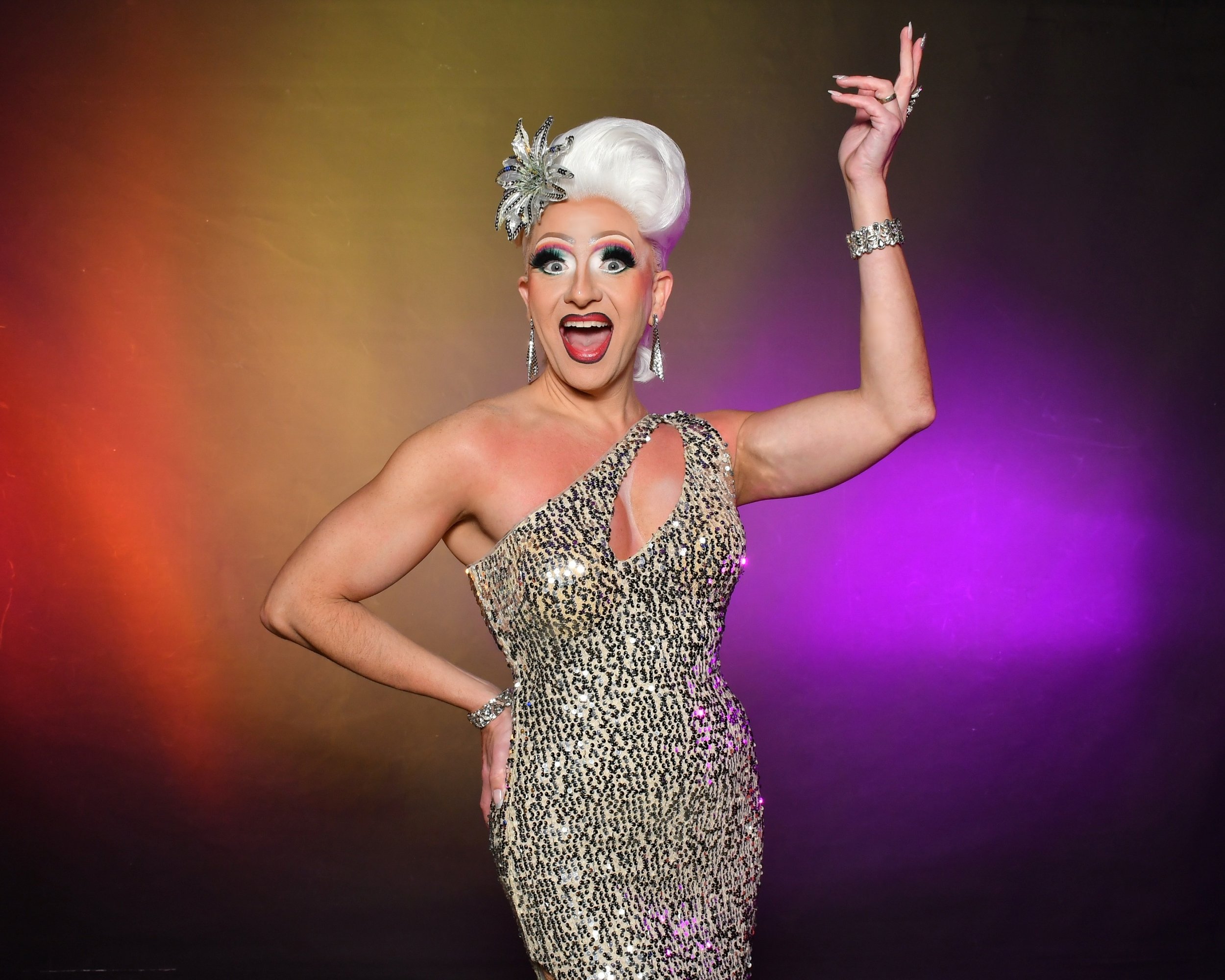
Nothing about Cacophony Daniels is accidental. Standing in seven-inch strappy heels, fishnet tights and a body-hugging dress covered in rhinestones and pearls, she commands the room with a laugh that can be heard in the back. White, fuchsia, purple and blue eyeshadow sweeps in perfect semicircles above her eyes, framed by heavy lashes and graphic liner. Her blonde hair defies gravity in an exaggerated 1970s beehive, topped with a bow that matches her dress, bringing the whole look together.
On Musical Monday at Rise Bar, customers sit at high and low tables facing a small stage in the front, with the DJ off to the side in his wooden booth like a loyal wingman to the two stars about to dazzle the crowd. Blue and purple lights frame Cacophony and her show partner and long‑time collaborator, Miss Evita Loca, as they take the stage.
“How is everyone doing tonight?!” Cacophony asks before breaking into song – “On Broadway” by The Drifters. The crowd cheers, clapping as she begins the melody in earnest.
Becoming Cacophony
Outside of drag, Courter Simmons, the performer behind the Cacophony Daniels persona, is known for many acting roles on and off Broadway, like Frankie Valli in Jersey Boys.
But Courter wasn’t always Cacophony or Frankie. He grew up dressing up in his mother’s clothing and jewelry and playing Barbies with his sister.
“I did understand (and was told all the time by some relatives, teachers, classmates, and neighborhood kids) that what I was doing was ‘wrong’ and while that did hurt, it never stopped me. Anyone who’s met me knows there’s no hiding who I am.”
After more than 20 years on stage, Courter sought another outlet to express himself creatively, something he felt he couldn’t do in male-presenting roles, explaining,
“It can be jarring to hear my (high, feminine) voice come out of a masculine body, but coming out of a drag persona, people seem to love it!”
We all use a version of beauty to figure out our self-expression, and no one understands this better than a drag queen.
“Drag is about putting on a character that gives me permission to be more myself both in and out of drag. When I first started doing drag, I’d walk into queer spaces and instantly feel welcome, wanted, and like the life of the party… because I was hired to be that!” Courter explained.
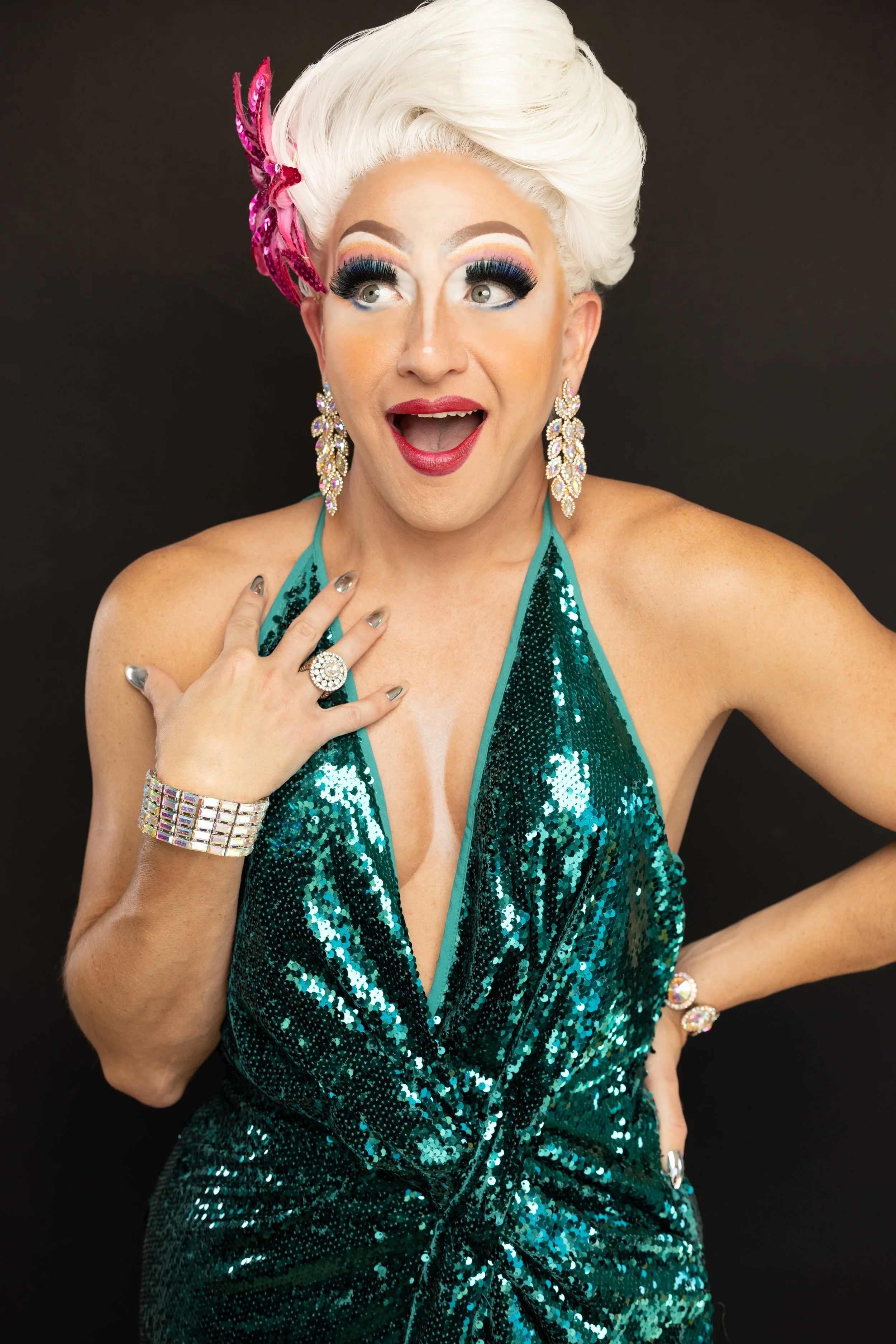
Eventually, the lines between himself and Cacophony blurred. “I’d be out of drag and walk into the same spaces with that attitude (forgetting that I wasn’t in drag) and realize ‘Hey, this is who I can just be ALL THE TIME.’ I can be out and loud and proud no matter what I’m wearing. Drag has helped me be more of myself, more of the time.”
For Courter, drag taught him to proudly take up space, and that even if you’re told that who you are or how you express yourself is “wrong,” you keep going. He learned, as we all do, that authenticity takes courage, and refusing to conform to please others is what changes us for the better.
Back at the bar, by the time Cacophony belted "Let's Hear It for the Boy," from Footloose, the room fully hers.
"I'm a boy in a dress, you can cheer for me!" Miss Evita Loca quipped as she strutted through the crowd. Regulars sang along, handing out dollar bills, the energy radiating from the audience.
Defying the Norm
The power of drag doesn't stop at the individual but creates a cultural reckoning. “It is a big ‘fuck you’ to gender norms and, ultimately, the patriarchy,” Courter explained. “Drag artists are constantly saying ‘Look, whatever you’ve told yourself you have to be in order to adhere to some gender that was assigned to you in the first seconds of your life based on your genitalia is bullshit.”
With only a few more songs left in Monday night’s show, the fully amped‑up audience passed a roll of toilet paper around the bar to make one long rope. Cacophony stood on a stool, lip-syncing to “The Circle of Life” from The Lion King, her red lipstick still in place, rhinestones glimmering beneath the stage lights, and a satisfied smile on her face.
No matter how you identify, how we show up is something we get to choose.
After wrapping up their last song, Cacophony and Miss Evita thanked the crowd for coming as the lights dimmed. The audience didn't leave, instead standing up to greet familiar faces.
The performance was over. Their presence wasn't.
“We are surrounded every day by negativity, and I try to give people respite from that,” Courter said. “It’s important that we stand up for the things that we believe in, and that can be exhausting, so hopefully people can come to a drag show and spend an hour or so laughing, cheering, and feeling a sense of joy and community.”
Celebrating Pride
Pride Month arrives every June as a celebration of love, difference, and acceptance, and for Courter, Pride and drag have always been two sides of the same coin. “Pride is the open expression of queerness, and what better form of that expression is there than drag?” he said . “Being queer upends that myth and says that there are thousands of ‘right’ ways to live.”
At the end of the day, Courter hopes his audiences resonate with drag in a way that celebrates uniqueness. “Be you. Have fun. Wear what you want. Dance how you want. That’s a strong message for anyone, no matter the generation.”
Instagram: @cacophonydaniels
